

A microphone is a device that captures sound and converts it into an electrical signal. In simple terms, the meaning of “microphone” comes down to that one job: turning physical sound into something a device can record, transmit, or amplify. That signal can then be recorded, transmitted, or amplified, which is why microphones sit at the center of phones, laptops, podcasts, music studios, gaming setups, video calls, live events, and cameras.
This guide covers what a microphone does, how it actually works, the main types available, how polar patterns affect what a mic picks up, common use cases, the specs worth understanding, and how to choose the right one for your specific need.
What Does a Microphone Do?
At its core, a microphone has one job: turning sound into a signal a device can use. A few ways that plays out in practice:
- It captures voice, music, or surrounding sound
- It converts that sound into an audio signal
- It sends that signal to a speaker, recorder, computer, phone, camera, or mixer
- It supports recording, communication, broadcasting, and amplification
Whether you’re on a phone call, recording a podcast, or performing on stage, the microphone is the starting point for everything that happens to your voice or sound afterward.
How Does a Microphone Work?
A microphone works in three basic steps, moving from physical sound to a usable electrical signal.
Sound Waves Hit the Diaphragm
Sound is really just air pressure changing rapidly. When you speak or play an instrument, those pressure changes travel outward and reach the microphone’s diaphragm, a thin, flexible surface inside the mic that physically moves in response.
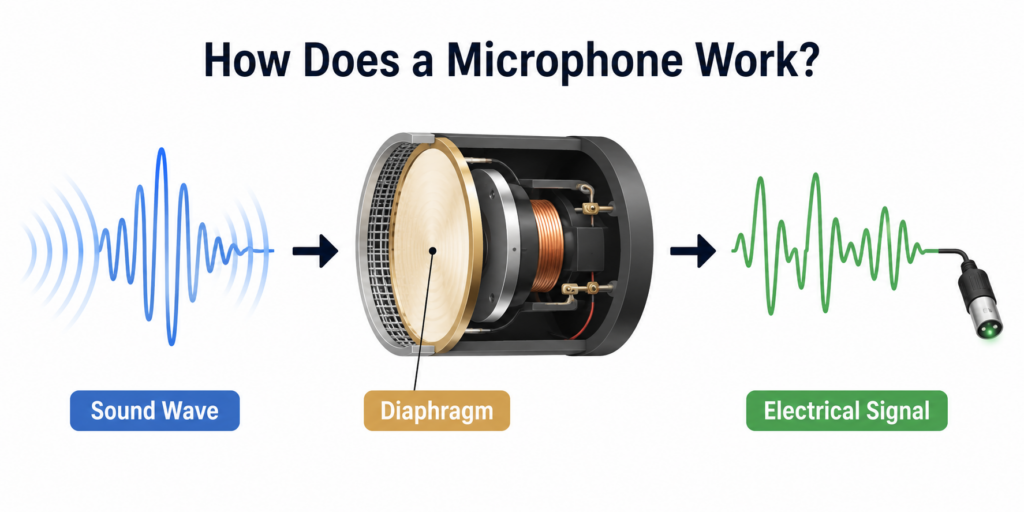
The Diaphragm Movement Becomes an Electrical Signal
This is where the microphone’s capsule, or transducer, comes in. A transducer is just a part that changes one form of energy into another. In a microphone’s case, it changes the physical movement of the diaphragm (acoustic energy) into an electrical signal.
Different microphone types handle this conversion differently, which is part of why a dynamic microphone sounds and behaves differently than a condenser microphone, even though both are doing the same basic job. We’ve recorded the same room with both types side by side, and the difference in how much background noise comes through is noticeable almost immediately.
The Signal Goes to a Device
Once the sound has been converted into an electrical signal, it travels onward to wherever it needs to go next, whether that’s a speaker, a recorder, an audio interface, a camera, a phone, or a computer. From there, the signal can be recorded, broadcast live, or played back through speakers or headphones.
Main Parts of a Microphone
Most microphones, regardless of type, share a handful of core components.
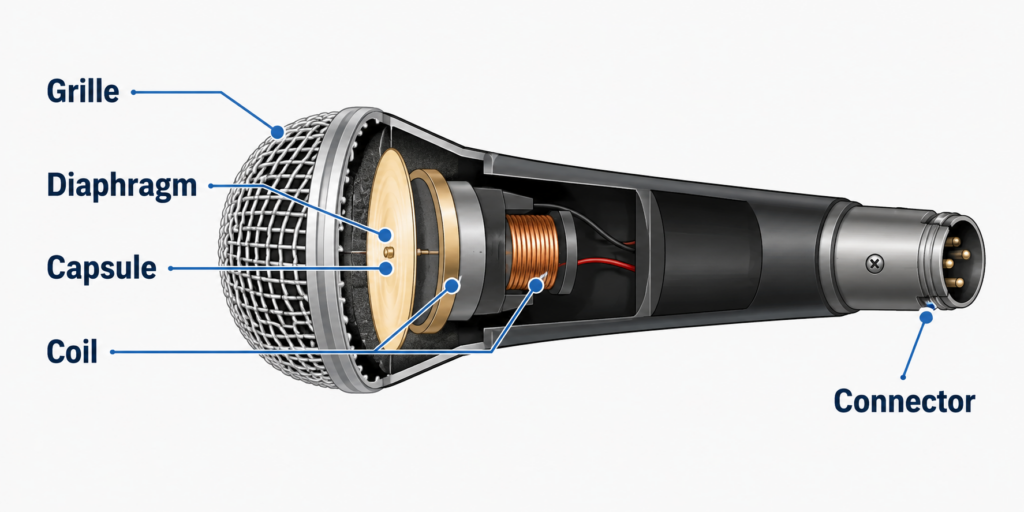
Diaphragm
The thin, moving part that physically reacts to incoming sound waves. This is the first point of contact between sound and the microphone itself.
Capsule or Transducer
The component that converts the diaphragm’s movement into an electrical signal. This is the heart of how a microphone actually functions.
Grille or Windscreen
The outer covering that protects the capsule and helps reduce breath noise and plosive sounds. Many setups pair this with a separate pop filter for even cleaner vocal recordings.
Connector or Output
The part that sends the finished signal on to another device, whether through USB, XLR, TRRS, or a wireless transmission like a wireless microphone receiver.
Main Types of Microphones
This is the part most people are actually looking for, since the right microphone type depends heavily on what you’re using it for.
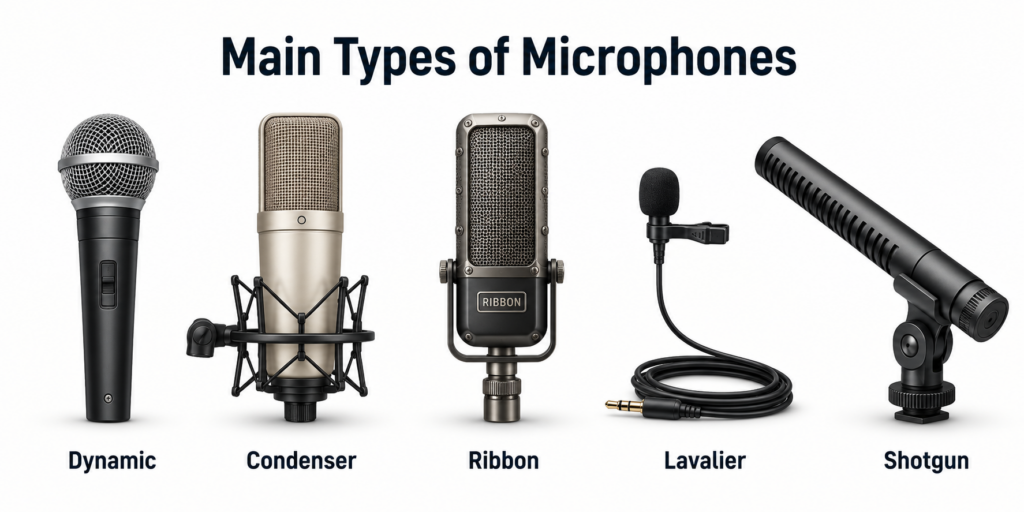
Dynamic Microphone
Dynamic microphones are best for live vocals, stage use, loud instruments, podcasting, and general rough use. They’re durable, simple, and built to handle high sound pressure levels without distorting, which is part of why they’re so common in live performance settings.
Condenser Microphone
Condenser microphones are best for studio recording, vocals, podcasts, acoustic instruments, and capturing fine sound detail. They’re more sensitive than dynamic mics, and most need phantom power or battery power to operate properly.
Ribbon Microphone
Ribbon microphones are known for a warm, vintage-style sound, making them a popular choice for studio vocals and guitar amps. They tend to be more delicate than dynamic or condenser mics, so they’re generally handled with more care.
Lavalier Microphone
Lavalier microphones are small, clip-on mics best suited for interviews, presentations, YouTube videos, online courses, and any situation where hands-free speaking matters.
Shotgun Microphone
Shotgun microphones are highly directional, making them ideal for film, vlogging, outdoor video, and any setting where you want to focus tightly on sound coming from one specific direction while rejecting noise from elsewhere.
USB Microphone
USB microphones are a strong starting point for beginners, gaming, streaming, video calls, podcasting, and direct computer recording, since they connect without needing extra hardware. Our guide to best USB microphones under $100 covers solid entry points if you’re shopping for one.
Wireless Microphone
Wireless microphones are well suited for stage use, events, fitness instruction, interviews, and any setting involving movement, since there’s no cable tying you to a fixed spot. If you’re setting one up, our guide on how to set up a wireless microphone system walks through the process.
Microphone Polar Patterns
A polar pattern describes where a microphone picks up sound from relative to its position. Understanding this matters just as much as choosing a mic type, since the wrong pattern for your environment can mean picking up far more background noise than you want.
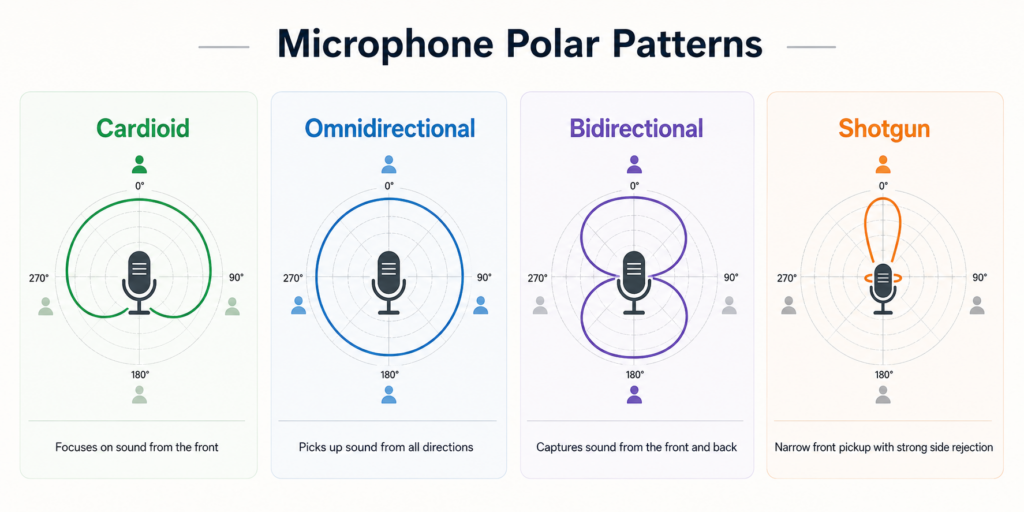
Cardioid
Picks up sound mainly from the front of the microphone. This is the most common pattern for vocals, podcasting, gaming, and recording in noisier rooms, since it naturally rejects a lot of sound coming from the sides and rear.
Omnidirectional
Picks up sound evenly from all directions. This works well for group discussions or capturing the natural ambience of a room, though it also means less isolation from background noise. For more on how multi-microphone setups use this kind of pattern together, see our guide on what a microphone array is.
Bidirectional
Picks up sound from both the front and back of the mic while rejecting sound from the sides. This pattern works particularly well for two-person, face-to-face interviews.
Shotgun or Hypercardioid
Picks up a narrow, focused area of sound directly in front of the mic. This is the pattern most associated with shotgun microphones, and it’s especially useful for video, film, and outdoor recording where isolating a specific sound source matters.
Common Uses of Microphones
| Use Case | Best Microphone Type |
|---|---|
| Podcasting | Dynamic or USB microphone |
| Gaming | USB microphone or headset mic |
| Singing | Dynamic for live, condenser for studio |
| YouTube videos | Lavalier, shotgun, or USB mic |
| Interviews | Lavalier or bidirectional mic |
| Live events | Dynamic or wireless mic |
| Studio recording | Condenser or ribbon mic |
| Video calls | USB mic or built-in mic |
| Smartphones | Lavalier or wireless mobile mic |
Important Microphone Specs Beginners Should Know
You don’t need to become an audio engineer to use a microphone well, but a few specs are worth understanding since they directly affect how your recordings actually sound.
Frequency Response
This describes how well a microphone captures low, mid, and high sound frequencies. A wider, flatter frequency response generally means a more natural, accurate sound.
Sensitivity
This describes how strongly a microphone reacts to incoming sound. Higher sensitivity captures quieter details more easily, but it can also pick up more unwanted room noise in the process. If you want more control over this directly, see our guide on how to adjust microphone sensitivity.
SPL Handling
This refers to how much loud sound a microphone can handle before the signal starts to distort. It matters most if you’re recording loud instruments or performing close to speakers.
Phantom Power
Many condenser microphones require phantom power to function, which is commonly supplied through an audio interface or mixer rather than a standalone battery.
USB vs XLR
USB connections are generally easier for beginners, since they work without extra hardware. XLR connections give you more control over your signal chain and remain the standard in professional audio setups.
How to Choose the Right Microphone
| User Need | Best Choice | Reason |
|---|---|---|
| Beginner podcast | USB dynamic mic | Simple setup and less room noise |
| Home studio vocal | Condenser mic | More detail and clarity |
| Gaming | USB mic | Plug and play |
| Live singing | Dynamic mic | Durable and feedback-resistant |
| Camera video | Shotgun mic | Focused pickup |
| Interviews | Lavalier mic | Hands-free voice capture |
| Two-person podcast | Two dynamic mics | Better voice separation |
| Outdoor video | Wireless lavalier | Mobility and cleaner speech |
Tips to Get Better Sound From a Microphone
A few habits make a real difference in how clean your audio actually sounds, regardless of which microphone you’re using:
- Speak 4 to 8 inches from the mic
- Use a pop filter for plosive sounds
- Keep the mic away from fans, AC units, and keyboard noise (see our guide on stopping a microphone from picking up keyboard noise if this is a recurring issue)
- Use a cardioid mic in noisier rooms
- Record in a room with soft surfaces to reduce echo
- Set your input gain properly before recording
- Always test your mic before recording or going live
Microphone vs Speaker vs Headset
| Device | Main Function |
|---|---|
| Microphone | Captures sound |
| Speaker | Plays sound |
| Headset | Combines headphones and a microphone |
| Audio interface | Connects professional microphones to a computer |
Final Answer – What Is Microphone?
A microphone is a sound input device that converts sound waves into electrical signals. It’s used for recording, communication, live sound, video calls, gaming, podcasting, broadcasting, and music production, and the right type for you depends entirely on what you’re trying to capture and where.
FAQ
What is a microphone in simple words?
A microphone is a device that captures sound and changes it into an electrical signal.
What is the main use of a microphone?
The main use of a microphone is to record, transmit, or amplify voice, music, and other sounds.
How does a microphone work?
A microphone works when sound waves move a diaphragm, and that movement is converted into an electrical signal.
What are the main types of microphones?
The main types are dynamic, condenser, ribbon, lavalier, shotgun, USB, and wireless microphones.
Which microphone is best for beginners?
A USB microphone is generally best for most beginners, since it connects directly to a computer and needs less setup than an XLR-based system.
What is the difference between a dynamic and condenser microphone?
A dynamic microphone is more durable and better suited for loud sound sources, while a condenser microphone is more sensitive and better suited for detailed studio recording.