

Disclosure: GeekSper may earn a commission from qualifying Amazon purchases made through links in this article, at no extra cost to you.
The best microphone for Valorant under $500 is the Shure MV7+ for players who want consistently clear callouts, useful USB processing, direct monitoring, and an XLR upgrade path. Most players do not need to spend anywhere near the full $500 budget, however. The FIFINE AmpliGame AM8 delivers the strongest value for a noisy gaming desk, while the Razer Seiren V3 Mini is the easiest compact choice.
This guide is built around competitive voice communication, not studio specifications that teammates cannot hear. We compared pickup behavior, required speaking distance, keyboard and room-noise risk, mute access, monitoring, connection options, desk space, software complexity, and current Amazon availability. We did not claim hands-on laboratory testing. Recommendations are based on manufacturer specifications, current product listings, established microphone behavior, and recurring buyer feedback. Amazon prices and rating counts change frequently, so check each product card for the latest offer.
If you want choices for more games and streaming styles, start with our best gaming microphones guide. Players with a harder spending limit should compare the best gaming microphones under $100. We also have a focused comparison of microphones for Valorant and Dota 2 team chat.
Quick picks: Valorant microphones under $500
| Microphone | Best for | Pickup design | Connection | Budget position |
|---|---|---|---|---|
| Shure MV7+ | Best overall | Dynamic cardioid | USB-C and XLR | Premium |
| FIFINE AmpliGame AM8 | Best value near a loud keyboard | Dynamic cardioid | USB and XLR | Budget |
| Razer Seiren V3 Mini | Best for a small desk | Condenser supercardioid | USB | Budget |
| Elgato Wave:3 | Best for streaming and audio routing | Condenser cardioid | USB-C | Midrange |
| HyperX QuadCast 2 S | Best RGB desktop package | Condenser, four patterns | USB-C | Midrange |
How much should you spend on a Valorant microphone?
A $500 ceiling gives you freedom, but it should not become a target. Valorant compresses voice chat, and your teammates care more about understandable consonants than studio depth. A well-positioned $50 dynamic microphone can produce better match communication than a $300 condenser placed too far away beside a mechanical keyboard.
- Under $60: Enough for clear ranked comms if you accept simpler software and spend time on placement.
- $100 to $200: Useful when you also stream, want direct monitoring, or need software mixing.
- $250 to $350: Worth considering for premium voice processing, durable construction, and USB plus XLR flexibility.
- $350 to $500: Usually unnecessary for Valorant alone. Extra budget is often better spent on a stable boom arm, headphones, acoustic control, or a quieter keyboard.
The right purchase is the least expensive setup that keeps your voice consistent without forcing teammates to hear every switch press. The five options below cover that range without pretending the most expensive model is automatically best for every room.
1. Shure MV7+ – Best overall microphone for Valorant under $500
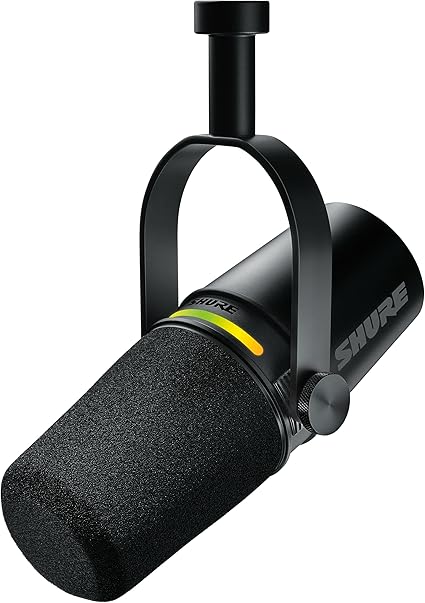

The Shure MV7+ earns the top position because its design matches the real problem at a competitive gaming desk. It is a dynamic cardioid microphone intended for close speech, which lets you use lower gain than a distant desktop condenser. That does not make background noise disappear, but it improves the balance between your voice and keyboard when the microphone is placed correctly.
USB-C mode unlocks Shure processing that is genuinely useful for gaming: Auto Level, a real-time denoiser, Digital Popper Stopper, tone choices, compression, and a high-pass filter. Auto Level can reduce sudden volume changes when you lean forward during a clutch or sit back between rounds. The headphone output allows direct monitoring, and the touch panel provides a clear mute control. XLR supports a later move to an interface or mixer.
Its published frequency range is 50 Hz to 16 kHz, and USB recording supports 24-bit audio at up to 48 kHz. Those figures are more than sufficient for in-game voice. The important advantage is the controlled voice workflow, not a high sample-rate claim. Place the MV7+ roughly 2 to 4 inches from your mouth and slightly off-axis to reduce plosives.
Who should buy the Shure MV7+?
- Competitive players who want the most complete voice-focused option in this list.
- Streamers or coaches who also record guides, reviews, or commentary.
- Players in untreated rooms with a mechanical keyboard or audible PC fans.
- Buyers who want to begin with USB and preserve an XLR upgrade path.
Who should skip it?
- Casual players who only need party chat a few times per week.
- Anyone unwilling to keep a dynamic microphone close to the mouth.
- Buyers who need an included desktop stand or boom arm in the box.
Why choose it over the others? It combines dynamic close-talk behavior, practical USB processing, monitoring, and XLR flexibility in one durable unit. The AM8 costs much less, but the MV7+ provides the more refined voice-management system.
Pros: Focused dynamic capture, USB-C and XLR, direct monitoring, useful automatic processing, visible mute control, strong build.
Cons: Premium price, stand sold separately, close placement is essential, USB processing does not carry through the passive XLR output.
2. FIFINE AmpliGame AM8 – Best value for ranked Valorant

FIFINE AmpliGame AM8 USB/XLR Dynamic Gaming Microphone
The FIFINE AM8 is the recommendation most players should consider before spending more. Its dynamic cardioid capsule, USB and XLR connections, headphone output, physical gain control, mute function, and optional RGB cover the features that matter for a gaming desk. It has also accumulated a much larger Amazon feedback base than many newer budget microphones, which helps reveal recurring strengths and setup complaints.
Connect it over USB for the simplest setup. Move the end-address capsule close to the corner of your mouth, point the rear toward the keyboard where practical, and reduce input gain until ordinary speech remains clear. XLR is available if you later add an audio interface, but USB-side controls and lighting behavior are not identical through an analog connection.
The AM8 lacks Shure Auto Level and the MV7+ denoiser, so your result depends more heavily on positioning and gain discipline. That is a reasonable compromise at its price. For Valorant chat, correct placement with the AM8 is usually a better investment than buying an expensive condenser and leaving it on the far edge of the desk.
Who should buy the FIFINE AM8?
- Players who want clear close-mic comms without paying premium prices.
- Mechanical-keyboard users who need a more controlled starting point.
- Beginners who want USB now and the option to try XLR later.
- Buyers who value onboard controls and direct monitoring.
Who should skip it?
- Players who want automatic level control and polished software processing.
- Anyone planning to speak from a foot or more away.
- Buyers expecting every USB feature to operate over XLR.
Why choose it over the others? It provides the useful gaming features of a dynamic USB microphone at the lowest practical entry cost in this group. Choose the Shure when you need better processing and refinement, not simply because your budget allows it.
Pros: Strong value, dynamic cardioid pattern, USB and XLR, monitoring, gain and mute controls, optional RGB.
Cons: Less advanced processing, requires close placement, boom arm and XLR cable may be separate purchases.
3. Razer Seiren V3 Mini – Best compact Valorant microphone

The Razer Seiren V3 Mini is the easiest fit for a narrow desk or a setup where the microphone must remain below the monitor. It uses a 14 mm condenser capsule with a supercardioid pattern, includes tap-to-mute, and has a built-in shock absorber. Recording support up to 24-bit/96 kHz is technically generous, although Valorant voice chat will not preserve that full detail.
The tighter pickup pattern can help when the front of the microphone is aimed correctly, but a condenser remains more sensitive to the room than a close dynamic option. Do not treat the word supercardioid as automatic keyboard removal. Keep the microphone near the mouth, identify its front side, and test the rear-lobe behavior before deciding where to place fans or speakers.
Tap-to-mute is especially convenient between rounds because it avoids searching for an onscreen control. The missing headphone jack and hardware gain dial are the major compromises. Players who need direct monitoring should choose the AM8, Wave:3, QuadCast 2 S, or MV7+ instead.
Who should buy the Razer Seiren V3 Mini?
- Players with limited desk depth or a low monitor position.
- Users who want simple USB operation and fast tap mute.
- Buyers in a reasonably quiet room with controlled keyboard noise.
- Minimalist setups that do not need XLR or complex routing.
Who should skip it?
- Players in loud shared rooms.
- Anyone who needs direct headphone monitoring or onboard gain.
- Users who want the forgiving close-talk behavior of a dynamic capsule.
Why choose it over the others? Choose it for size and simplicity. The AM8 is better for noise control and monitoring, but the Seiren V3 Mini occupies less visual and physical space.
Pros: Compact footprint, focused supercardioid pattern, tap mute, built-in shock absorption, simple USB setup.
Cons: No headphone output, no XLR, no hardware gain dial, condenser sensitivity can reveal keyboards and room reflections.
4. Elgato Wave:3 – Best for Valorant streaming and Discord routing

The Elgato Wave:3 is the strongest choice when your problem is managing several audio sources rather than capturing voice alone. Wave Link can organize the microphone, Valorant, Discord, browser, music, and capture software into separate mixes. Teammates can receive a clean microphone feed while stream viewers hear a balanced combination of game and communication audio.
The cardioid condenser delivers a clear, detailed voice in a controlled room. Clipguard provides additional protection when a quiet callout suddenly becomes a loud reaction, and the capacitive mute avoids the hard click of a mechanical switch. The front control and headphone output make level checks easier without repeatedly opening settings.
Software routing is powerful only when it remains predictable. Select the intended devices explicitly in Windows, Discord, Valorant, OBS, and Wave Link. Save a stable profile and test it before ranked play. A routing mistake can leave teammates hearing the wrong input even when your local recording sounds correct.
Who should buy the Elgato Wave:3?
- Valorant streamers who need separate personal and audience mixes.
- Users who want direct monitoring, Clipguard, and silent capacitive mute.
- Players with a quiet or moderately treated room.
- Buyers already using Elgato capture tools and software.
Who should skip it?
- Players who only need uncomplicated in-game chat.
- Users who do not want to manage virtual audio channels.
- Anyone placing the microphone far from the mouth beside a loud keyboard.
Why choose it over the others? Its main advantage is routing. The MV7+ is the better voice-first premium choice, while the Wave:3 is more useful when game, Discord, music, and stream audio must be controlled separately.
Pros: Flexible Wave Link mixing, Clipguard, direct monitoring, capacitive mute, useful front control.
Cons: USB only, condenser sensitivity requires care, software routing adds setup time.
5. HyperX QuadCast 2 S – Best RGB microphone for Valorant setups

The HyperX QuadCast 2 S is designed for players who want the microphone to be part of the visual setup. It includes a desktop stand, detachable shock mount, USB-C cable, USB-A adapter, headphone monitoring, top mute control, extensive RGB lighting, and four selectable pickup patterns. That makes it the most complete display-ready package in this list.
Use cardioid mode for Valorant. Stereo, bidirectional, and omnidirectional modes are useful for other recording situations, but they introduce more unwanted sound into solo team chat. Keep gain moderate and move the microphone closer than glossy setup photos often suggest. The shock mount reduces some vibration but cannot erase hard desk impacts or switches positioned directly beside the capsule.
The QuadCast 2 S makes sense for streaming camera frames and RGB-focused battle stations. It is harder to justify when communication alone is the goal because the AM8 provides more voice-focused value, and the Wave:3 offers stronger software routing.
Who should buy the HyperX QuadCast 2 S?
- Players who want a complete desktop stand and shock-mount package.
- Streamers who want the microphone visible in an RGB setup.
- Users who will use other pickup patterns for interviews or group recording.
- Buyers who want direct monitoring and a prominent mute indicator.
Who should skip it?
- Players with a small desk or an understated setup.
- Mechanical-keyboard users prioritizing rejection over appearance.
- Anyone who will never use multiple patterns or RGB.
Why choose it over the others? It offers the best all-in-one visual desktop package. Choose the Razer for a smaller footprint, the Wave:3 for routing, or a dynamic model for a more voice-focused noisy-room setup.
Pros: Stand and shock mount included, four patterns, monitoring, easy mute, extensive RGB control.
Cons: Large footprint, extra patterns are unnecessary for solo gaming, condenser pickup requires careful gain and placement.
Best Valorant microphone by budget
- Best under roughly $60: FIFINE AM8 for close dynamic capture and monitoring.
- Best compact budget option: Razer Seiren V3 Mini for a quiet, space-limited desk.
- Best midrange streaming option: Elgato Wave:3 for Wave Link routing.
- Best midrange RGB package: HyperX QuadCast 2 S for a visible desktop setup.
- Best premium option: Shure MV7+ for voice processing, monitoring, and USB plus XLR flexibility.
None of these recommendations needs the entire $500 budget. If you already own a usable microphone, spend first on placement. A solid boom arm, stable shock isolation, and a quieter microphone position can change the result more than replacing one capable USB microphone with another.
Settings that matter more than microphone price
Place the microphone before changing gain
Start dynamic microphones about 2 to 4 inches from your mouth. Start condensers around 4 to 8 inches away. Move slightly off-axis so breath does not hit the capsule directly. Once placement is stable, lower gain until normal speech remains clear without amplifying the entire room.
Aim the least sensitive area toward the keyboard
A cardioid microphone generally rejects most strongly from the rear. A supercardioid pattern has a narrower front but can have a small rear pickup lobe. Record speech and typing together, rotate the microphone in small steps, and keep the orientation that improves the voice-to-keyboard balance. Our guide to how microphones work explains why position changes the captured signal.
Leave headroom for loud reactions
Speak at your loudest realistic match volume while watching the input meter. Leave enough headroom that a sudden clutch reaction does not clip. Compression can reduce level variation, but it cannot reconstruct audio that was already distorted at the input.
Use one moderate noise-suppression stage
Discord, microphone software, graphics utilities, and streaming applications may each offer suppression. Stacking several aggressive systems can remove the opening consonant from a short callout or make speech sound watery. Begin with one moderate processor and test quiet speech, rapid calls, and normal typing.
Verify the exact Valorant input
A good recording in another app does not prove Valorant is using the same microphone. Select the input explicitly in Windows, Discord, Valorant, and any routing software. Disable unused webcam and controller microphones when possible. Ask a teammate for a ten-second level check before queueing ranked.
Dynamic vs condenser for Valorant
A dynamic model such as the Shure MV7+ or FIFINE AM8 is the safer recommendation for most untreated gaming rooms. It encourages close placement and lower gain, which often improves the balance between speech and environmental noise. A condenser such as the Razer, Elgato, or HyperX can deliver detailed speech in a quiet room, but it reveals poor placement more readily.
Neither design automatically removes a keyboard. Pickup pattern, distance, direction, room surfaces, gain, typing technique, and software processing all contribute. Read our explanation of what a condenser microphone is if you want to understand the tradeoff before buying.
Frequently asked questions
What is the best microphone for Valorant under $500?
The Shure MV7+ is the best overall option because its dynamic cardioid design, close speaking position, USB processing, monitoring, mute control, and XLR support fit competitive voice use. The FIFINE AM8 is the better value choice for most buyers.
Do I need to spend $500 on a Valorant microphone?
No. Valorant voice chat does not preserve studio-level detail, and a properly positioned budget dynamic microphone can deliver clear callouts. Spend more only when you also need advanced processing, streaming tools, stronger construction, or future XLR flexibility.
Which microphone rejects keyboard noise best?
The Shure MV7+ and FIFINE AM8 are the easiest starting points because their dynamic close-talk workflow lets you reduce gain. No microphone guarantees keyboard silence. Placement, direction, desk isolation, and moderate suppression remain necessary.
Should I use push-to-talk in Valorant?
Push-to-talk is useful in a shared or noisy room and prevents open-mic distractions. Voice activation is faster during fights, but only when the threshold reliably opens for quiet speech and stays closed for keyboard noise. Test both modes with real match volume.
Is USB or XLR better for Valorant?
USB is the better starting point for almost every Valorant player because it avoids an interface and additional gain staging. XLR becomes valuable for a physical mixer, multiple sources, or a broader studio setup. It does not automatically make team chat clearer.
Final recommendation
Choose the Shure MV7+ for the best overall premium setup under $500. Choose the FIFINE AM8 if you want the smartest performance-to-price decision, especially beside a mechanical keyboard. The Razer Seiren V3 Mini is best for a compact quiet desk, the Elgato Wave:3 is best for streaming and audio routing, and the HyperX QuadCast 2 S is best for an RGB-focused desktop package.
Do not spend the remainder of the budget simply because it is available. A close microphone, sensible gain, correct direction, and one clean processing path will improve Valorant callouts more than chasing the most expensive specification sheet.