
If you’ve looked at any list of microphones for podcasting, gaming, live vocals, or streaming, a dynamic microphone was almost certainly somewhere near the top. It’s not there by accident. Dynamic mics are the workhorse of audio recording, built to take punishment, handle loud sound without flinching, and deliver consistently usable results even in rooms that were never designed for recording.
We’ve tested dynamic mics against condenser mics in the same room and on the same voice, and the difference is real and practical rather than just theoretical. This guide explains what a dynamic microphone actually is, how it works, what it’s genuinely suited for, where it falls short, and how to figure out if it’s the right choice for your specific setup.
What Is a Dynamic Microphone?
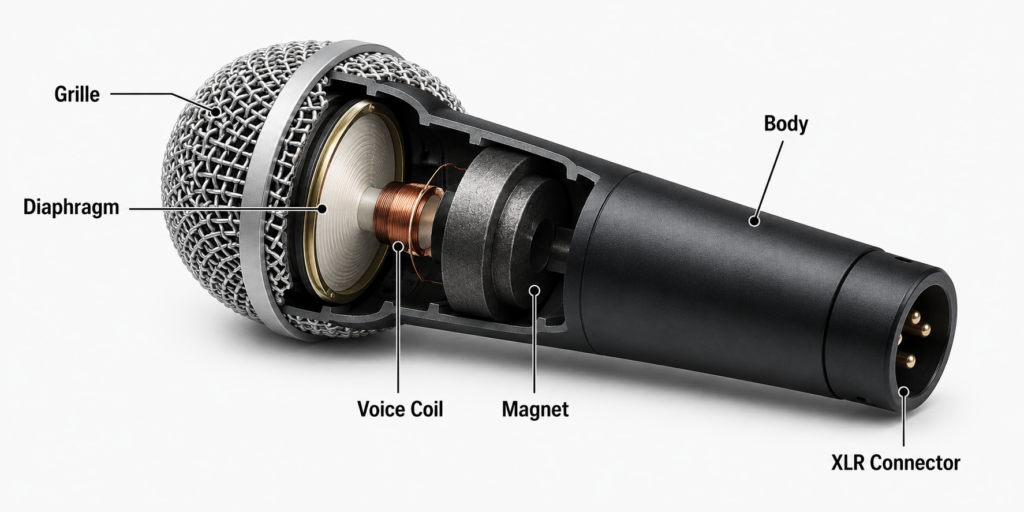
A dynamic microphone is a type of microphone that converts sound waves into an electrical signal using a diaphragm, a voice coil, and a magnet. When sound reaches the diaphragm and causes it to move, the attached voice coil moves with it inside a magnetic field, and that movement generates an electrical signal.
The design is mechanically simple, which is a feature rather than a limitation. No external power is needed. No fragile components are exposed to the environment. The capsule handles high sound pressure levels that would distort or damage more sensitive microphone types. That combination of simplicity and durability is exactly why dynamic microphones dominate live sound stages around the world.
For more on how microphones work in general and the full landscape of available types, see our guides on how a microphone works and types of microphones.
How Does a Dynamic Microphone Work?
The working process inside a dynamic microphone follows a clear sequence:
- Sound enters the microphone and reaches the diaphragm
- The diaphragm vibrates in response to the incoming sound pressure
- The voice coil, which is physically attached to the diaphragm, moves with it
- The voice coil moves inside a magnetic field
- That movement generates a small electrical signal through electromagnetic induction
- The signal travels out of the microphone through an XLR or USB connection to a mixer, audio interface, speaker, or computer
This process is similar in principle to how an electric generator works, just on a much smaller scale. It requires no external power source, which is one of the reasons dynamic mics are so practical and travel-friendly.
For a deeper look at this process and how it differs from condenser and ribbon microphone mechanics, see our full guide on how a microphone works.
Main Parts of a Dynamic Microphone
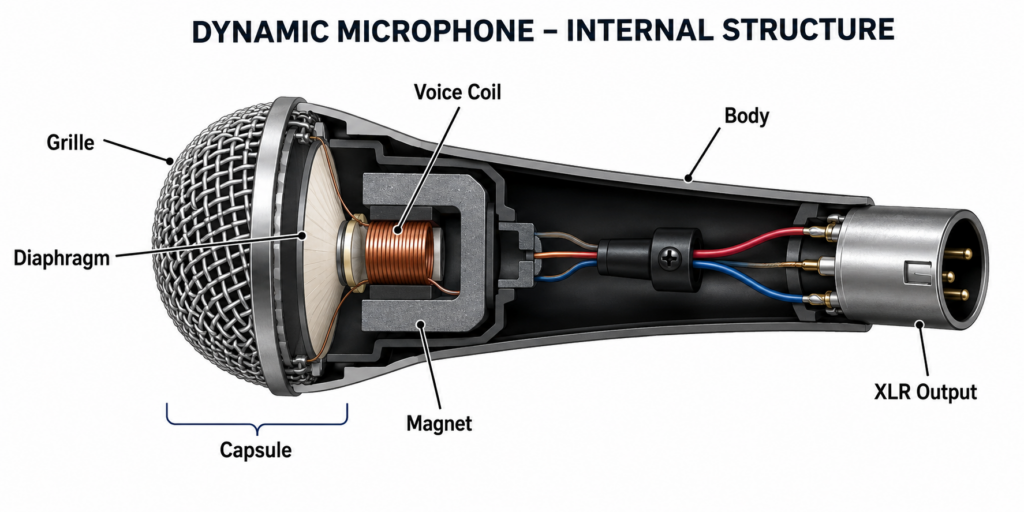
Grille: The outer metal mesh at the front of the mic that protects the capsule and reduces breath noise hitting the diaphragm directly.
Diaphragm: The thin, lightweight surface that physically moves when sound waves reach it. This is where sound enters the signal chain.
Voice coil: A coil of wire attached directly to the diaphragm. When the diaphragm moves, the voice coil moves with it.
Magnet: Surrounds the voice coil and creates a magnetic field. The coil moving through this field is what generates the electrical signal.
Capsule: The complete assembly of diaphragm, coil, and magnet together. This is the core sound-capturing component of the microphone.
XLR or USB output: The connector at the base of the microphone that sends the signal on to an audio interface, mixer, or computer. Most professional dynamic mics use XLR. Some beginner-friendly models use USB instead.
Body: The outer housing that protects all internal components and gives the mic its physical form.
Dynamic Microphone Uses
Dynamic microphones are genuinely versatile, but they’re not suited for everything equally. Here’s where they genuinely shine:
Podcasting: Dynamic mics are the most common choice for podcasting, especially in rooms that aren’t acoustically treated. Their lower sensitivity means they’re more forgiving of background noise, fan hum, HVAC, and street noise than a condenser mic would be.
Live singing: The vast majority of live vocal microphones on stage are dynamic mics. They handle the high sound pressure of a singer projecting at full volume, resist feedback better than condensers, and are built to survive the physical demands of touring.
Gaming and streaming: Dynamic mics reject keyboard noise, fan noise, and room echo better than many condenser microphones in the same price range. For a gaming setup in a bedroom or home office, this makes a meaningful difference in call and stream quality.
YouTube videos: Handheld or boom-mounted dynamic mics work well for talking-head and interview-style content where the speaker can stay reasonably close to the mic.
Interviews: A single dynamic mic held between two people, or two dynamic mics on separate channels, is a common and practical interview setup.
Stage events and public speaking: Conference microphones, event emcees, church sound — most handheld stage mics in these settings are dynamic designs.
Guitar amps and drums: Many studio engineers prefer a dynamic mic pointed at a guitar amp speaker or a drum shell specifically because the mic handles the high SPL without distorting.
For our picks across different use cases, see guides like best mic for Discord, best microphones for gaming, and best microphones for podcast.
Pros and Cons of Dynamic Microphones
- Durable construction that handles rough use and live environments
- Handles loud sound and high sound pressure levels without distorting
- Built for stage use and travel
- Does not usually need phantom power
- Naturally rejects more background noise than most condenser mics
- Simple to set up and use
- A strong choice for beginners who want reliable results quickly
- Usually more affordable than condenser mics of comparable build quality
- Less sensitive than condenser microphones, so quieter sounds don't register as clearly
- Usually needs more gain from a preamp or audio interface
- Captures less fine detail in quiet, controlled studio environments
- Not always ideal for soft vocals or quiet acoustic instruments
- Budget models can sound dull or boxy compared to a well-designed condenser at the same price
Advantages of Dynamic Microphones
- Do not require a power supply to operate
- Well suited for vocals, drums, and guitar amps with clear quality
- Amplify vocals and sounds effectively across recording types
- Generally more affordable than other microphone types
- Durable and high quality construction
- Handle high Sound Pressure Levels (SPL) well, thanks to the moving coil magnetic diaphragm design
Disadvantages of Dynamic Microphones
- The diaphragm tends to be heavier than in other microphone types
- The wire coil can limit movement, restricting frequency range and response rate
- Generally not as detailed as condenser microphones
- Less suited for recording instruments with higher frequencies
- May miss capturing some sounds, since the coil requires more sound pressure to move
- Less accurate overall compared to condenser microphones
If you are looking for dynamic microphone options specifically for streaming, our guide to best dynamic microphones for streaming covers strong picks in that category.
Dynamic Microphone vs Condenser Microphone
This is one of the most-searched questions in the microphone space, and the honest answer is that neither type is universally better.
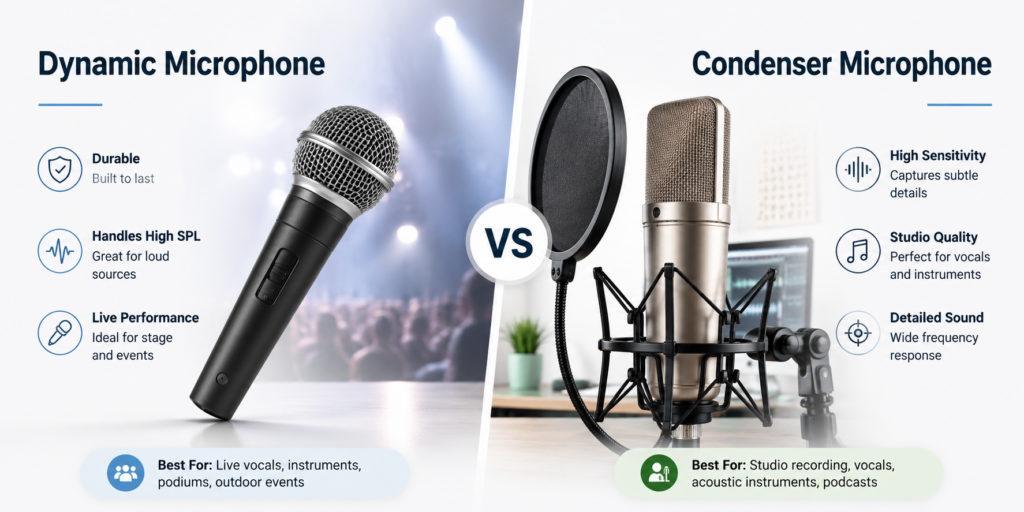
| Feature | Dynamic Microphone | Condenser Microphone |
|---|---|---|
| Sensitivity | Lower | Higher |
| Best for | Live vocals, podcasting, loud sound | Studio vocals, detail, controlled rooms |
| Power needed | Usually no phantom power | Usually needs phantom power |
| Room noise | Rejects more background noise | Captures more room sound |
| Durability | Stronger | More delicate |
| Beginner use | Good for untreated rooms | Good for treated, quiet rooms |
Dynamic microphones are less sensitive and better suited for loud or noisy environments. Condenser microphones often capture more detail and nuance, but in return they pick up more of the room around you. For more on how condenser microphones work and where they’re the stronger choice, see our guide on what a condenser microphone is.
Is a Dynamic Microphone Good for Podcasting?
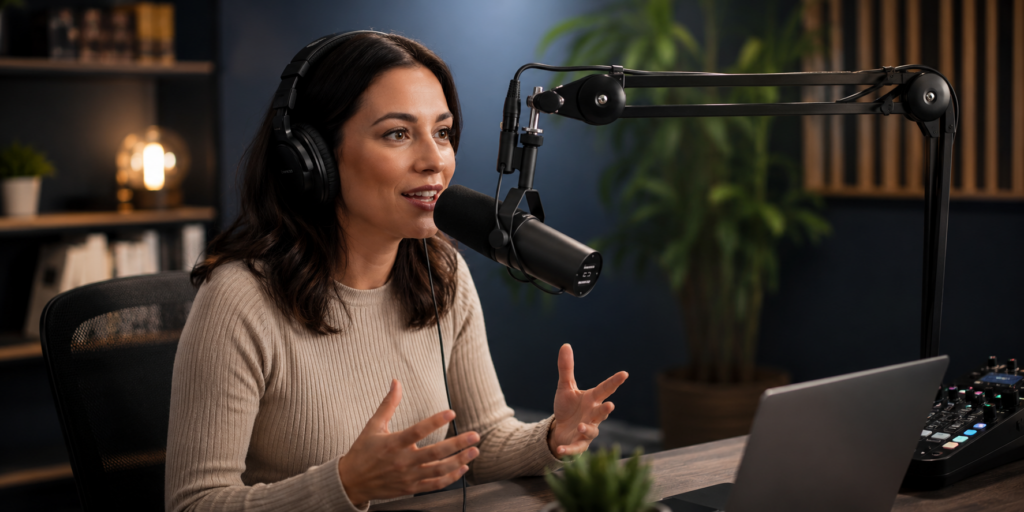
Yes, for most podcasters, especially beginners. A dynamic mic’s lower sensitivity means it won’t pick up every breath, keyboard click, or car passing outside your window the way a sensitive condenser would. When positioned 4 to 8 inches from your mouth, a dynamic mic delivers clear, present voice audio that works well across all podcast formats.
In our testing, the difference between a dynamic and condenser mic is most obvious when the room isn’t treated. In those rooms, a dynamic mic consistently sounds cleaner and more intentional than a condenser in the same position.
Is a Dynamic Microphone Good for Singing?
Yes, for live singing. On stage, dynamic mics are essentially the industry standard for lead vocals. They handle the full projected volume of a singer without distorting, they resist feedback from stage monitors better than condenser mics, and they hold up to nightly use and travel.
For studio vocal recording where the goal is capturing the most nuanced and detailed performance possible, a condenser microphone usually gets you closer to that result in a quiet, treated room.
Is a Dynamic Microphone Good for Gaming and Streaming?
Yes, consistently. A bedroom or home office typically has mechanical keyboard noise, fans, HVAC, and room reflections. A condenser mic picks all of that up. A dynamic mic, positioned close to your mouth with gain set appropriately, focuses primarily on your voice and lets the background fall off.
This doesn’t mean condenser mics can’t work for streaming, but they require more investment in acoustic treatment to sound clean. A dynamic mic is more forgiving of a real-world room.
Who Should Buy a Dynamic Microphone?
- Beginner podcasters, especially in untreated rooms
- Gamers and streamers dealing with keyboard or fan noise
- Live singers who need a stage mic
- YouTubers doing talking-head content
- Event speakers and public presenters
- Anyone recording guitar amps, drums, or loud instruments
- People who want a durable mic that will survive daily or touring use
Who Should Avoid a Dynamic Microphone?
- People recording soft, nuanced studio vocals who want to capture every detail
- Audio engineers recording quiet acoustic instruments
- People with very low-gain audio interfaces who can’t get enough clean volume
- People who specifically need the sensitivity and detail that a condenser microphone provides in a treated room
Best Dynamic Microphone Buying Tips
USB or XLR connection: USB dynamic mics connect directly to a computer without extra hardware. XLR dynamic mics give you more flexibility but require an audio interface or mixer.
Cardioid pickup pattern: Most dynamic mics use a cardioid pattern, which picks up sound from the front and rejects noise from the sides and rear, making them forgiving in noisy rooms.
Build quality: A metal body with a sturdy grille will last significantly longer than an all-plastic construction.
Gain support: Some dynamic mics need high gain levels that not all interfaces handle cleanly. Check whether your interface can provide enough clean gain before buying.
Pop filter or windscreen: Adding a pop filter reduces plosive sounds from “p” and “b” sounds, which is especially important for podcasting and vocal recording.
Mic stand or boom arm: A boom arm keeps the mic at consistent mouth distance and reduces handling noise. See our Rode PSA1 review for a popular arm option.
Recording environment: If your room has hard floors, bare walls, and no soft furnishings, even a dynamic mic will pick up noticeable room echo. Adding a rug, bookshelf, or acoustic panel behind your recording position helps considerably.
Common Mistakes to Avoid
Speaking too far from the microphone. A dynamic mic needs you close, ideally 4 to 8 inches. Moving back even a foot makes the voice sound thin and distant.
Buying XLR without an audio interface. An XLR dynamic mic won’t connect directly to a computer’s headphone jack.
Using too little gain. If the volume is low and you keep boosting in post-processing instead of at the interface, you’ll amplify noise along with your voice.
Recording in a very echoey room. Even dynamic mics won’t fully compensate for a room with strong reflections. Basic room treatment makes a bigger difference than many equipment upgrades.
Expecting a dynamic mic to sound like a condenser mic. They’re designed for different purposes. If you buy a dynamic mic knowing what it does well, you’ll be satisfied. If you buy one expecting studio-condenser detail in an untreated room, you’ll be disappointed.
Ignoring mic placement. The same dynamic mic can sound dramatically different depending on distance, angle, and what’s around it in the room.
Final Verdict
A dynamic microphone is the right choice for most beginners, podcasters, gamers, streamers, live vocalists, and anyone recording in a room that isn’t specifically designed for audio. It’s durable, practical, and more forgiving of real-world recording conditions than most condenser microphones at the same price.
If your goal is capturing nuanced, detailed studio vocals or quiet acoustic instruments in a treated room, a condenser microphone will serve you better. But for the majority of everyday recording, streaming, and live sound applications, a dynamic mic does the job reliably and consistently.
FAQ
What is a dynamic microphone used for?
A dynamic microphone is used for podcasting, live vocals, interviews, gaming, streaming, instruments, and stage sound.
Does a dynamic microphone need phantom power?
Most dynamic microphones do not need phantom power. They generate their own signal through electromagnetic induction and work without external power.
Is a dynamic microphone better than a condenser microphone?
A dynamic microphone is better for loud sound, live use, and noisy rooms. A condenser microphone is better for detailed studio recording in a quiet, treated room. Neither is universally better; the right choice depends on your use case.
Is a dynamic microphone good for beginners?
Yes. A dynamic microphone is one of the best starting points for beginners because it’s durable, simple to set up, forgiving of noisy rooms, and useful across a wide range of recording situations.