
Searching for the best microphone for podcasting can feel overwhelming, since there’s a huge range of options on the market that all seem to blur together. We tested and researched the top 5 best microphones for podcasting to make that decision easier.
Each mic in this list has its own strengths, so take a look at the details for each one to see which fits your specific podcasting setup best.
Quick verdict: the Blue Yeti is the best overall pick for new podcasters thanks to its versatility and easy setup. The Rode Procaster is the better choice if you want a true broadcast-quality dynamic mic and don’t mind the higher price.
Top 5 Best Microphones for Podcast
1. Blue Yeti
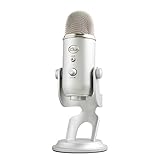
Blue Yeti microphones are well known for strong audio quality and performance whenever professional-grade recording comes up. The brand has invested heavily in producing microphones that help users get the most out of their recordings.
The Blue Yeti is a USB microphone and one of the most recognizable digital broadcast mics in the world. It delivers strong audio quality thanks to its condenser design, and it’s genuinely simple to use with plug-and-play setup. The quality here is well worth the affordable price point.
In our testing, the Blue Yeti’s included stand made setup easy right out of the box. The design already feels elegant, giving off studio-mic vibes with a build quality that backs that up. The body finish is clean, and the overall package is straightforward without extra hassle.
One of the biggest advantages of the Blue Yeti is its range of recording modes. It’s a USB mic with an omnidirectional cardioid polar pattern, alongside bidirectional and stereo options. This condenser mic covers a frequency range of 20Hz to 20kHz.
It offers settings for solo recording, two-person live recording, and group recording, all delivering strong output. Audio quality stays strongest when recording close to the mic, helping everyone come through clearly during a podcast.
Given its overall quality, this is likely the top pick for anyone who wants to keep podcast recordings for years without distortion or noise creeping in.
Pros
- Reasonably priced
- Versatile features and settings
- Great sound recording quality
- Easy to set up
Cons
- Limited stand adjustment
2. Shure SM58LC
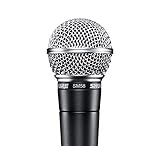
Shure is a well-established microphone brand with some of the most trusted mics in the world. People trust this brand for its reliability and sound quality, which is exactly why the SM58 earns a spot on this list.
The Shure SM58LC has built a strong reputation among performers. It covers durability, an affordable price, and dependable quality all in one package, making it a strong choice for recording.
In our testing, the SM58 proved dependable for both home studio use and live sessions. Its understated design prioritizes function over flash, giving you a gentle, simple body that feels good in hand.
The Shure SM58 is a strong cardioid mic with a frequency response of 50Hz to 15kHz, well suited for vocal recording. It includes an internal shock mount to reduce vibration and noise from the sides of the mic. A removable steel grille on the front makes cleaning and noise reduction simple.
It comes with a solid stand connector that adjusts through a 180-degree angle, built from thick plastic that feels resistant to breaking. The mic delivers high quality sound with clear voice capture from directly in front. An internal pop filter further enhances sound quality by reducing extra noise.
This mic performs best in a controlled environment with limited background noise, like a quiet room at home. Make sure everything is properly positioned when recording to get the best results from this handheld microphone.
Pros
- Good midrange recording focus
- Durable construction
- Internal shock mount for reducing noise
- Includes a stand adapter and zipper pouch
- Ideal for live performances
Cons
- An external pop filter is recommended for studio recording
For a closer look at the SM58 specifically, see our Shure SM58 review.
3. Rode Procaster
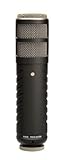
If you’re serious about podcasting, the Rode Procaster is worth checking out. Rode produces a wide range of microphones across different categories, and the Procaster is built specifically with podcast recording in mind.
Transmission quality isn’t something to overlook with this mic. Its high-output dynamic capsule structure delivers a no-compromise result tailored specifically for voice, giving you high quality recordings whether you’re in a studio or a more casual recording space.
The Procaster’s body is dark, durable, and easy to hold, with an attractive overall design. The main tradeoff is price, which sits a bit higher than its competitors given the build quality and sound on offer.
It captures sound well when you speak directly in front of it, reducing background noise and vibration effectively. Its frequency response of 75Hz to 18kHz works well for recording music and tunes for your content.
The high output on the Procaster works well for broadcasting applications like webcasts or live streams, particularly given its low balanced impedance. The internal pop filter helps capture crystal clear vocals, and the shock mounting reduces vibration for a cleaner overall audio experience.
This is a pricier option, best suited for podcasters and broadcasters who update and share content regularly, including webcasts and ongoing audience engagement.
Pros
- Dynamic microphone structure
- High quality sound capture
- Reliable for recording music and tunes
- Enhanced vocal recording with pop filter
Cons
- Higher price point
4. Audio-Technica ATR2100x-USB
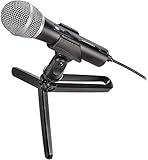
The Audio-Technica ATR2100x-USB is another strong contender if you haven’t settled on a podcasting mic yet. Audio-Technica has the flexibility to produce some of the strongest mic lineups available, proven especially well for live session recordings, which makes the ATR2100x worth trying.
This flexible microphone is built for live recordings across webcasts, podcasts, or broadcasts, helping viewers and listeners get clear audio. It offers two connection options: a USB connector for your computer or other devices, and an XLR cable connection for a sound system mic input during live recording, with a built-in pop filter to reduce plosives.
With a headphone jack and level control, you can monitor the recorded sound directly or adjust it as needed. The design stays simple, much like a standard microphone.
The ATR2100x-USB includes a strong analog-to-digital converter, supporting up to 24-bit, 192kHz resolution for excellent fidelity, along with a headphone jack with level control for direct monitoring. It uses a cardioid pattern with an XLR connector, covering a frequency response of 50Hz to 15,000Hz, helping reject unwanted sound from the sides and rear.
This handheld, capable microphone with a smooth, extended recording range is well suited for podcasting, streaming, conferencing, and other PC audio applications. The sound stays smooth and clean, appropriate for podcasting, home studio recording, and voiceover work.
It’s a strong choice for anyone recording live interviews and sessions, or producing podcasts regularly to keep an audience engaged. The mic is built to perform reliably over a long period without issues.
Pros
- Sturdy tripod desk stand for stable recording
- Smooth, extended frequency response
- Dual connectivity options
- Excellent frequency response
Cons
- Fewer extra features compared to some competitors
For more on this mic, see our review of the Audio-Technica AT2020, another strong option from the same brand.
5. HyperX QuadCast S
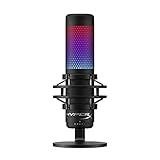
The HyperX QuadCast S rounds out this list as a strong podcasting pick. It’s a solid choice given the brand’s support and warranty offerings, and the QuadCast S has built a strong reputation for performance and reliability over the years.
The HyperX QuadCast doesn’t need expert setup. It’s simple to use, raised on an adjustable stand paired with a dual shock mount to reduce vibration. A dial near the base and a back handle let you switch between different pickup patterns.
The design includes a dedicated mute touchpad on top, letting you mute the mic instantly. This is a genuinely useful feature for live sessions where you don’t want unexpected sounds bleeding into your recording. Lighting behind the mic also makes it easy to tell at a glance whether it’s on or off.
You can choose from four polar pattern settings (stereo, cardioid, omnidirectional, bidirectional) with a frequency response of 20Hz to 20kHz. It handles sound well with low noise sensitivity down to -36dB.
This podcasting mic doesn’t need a separate pop filter, since it uses a fabric-like material placed behind the grille to capture clean sound. The result is impressively clear, with strong overall performance.
We’d recommend sticking with the cardioid pattern for podcasting specifically, since it performs well recording straight ahead while limiting unwanted resonance. Additional accessories are available to enhance the experience further, but overall, it’s a strong microphone for regular podcast recording.
Pros
- Built-in shock mount and pop filter
- High sound recording quality
- Customizable lighting
- Quick mute switch
Cons
- Higher price point
For the full breakdown, see our HyperX QuadCast review.
FAQ
What is the best microphone for a podcast?
Strong options for podcast recording include the Shure SM58, Blue Yeti, Shure SM7B, Rode Procaster, and Rode NT-USB. For more on the SM7B specifically, see our comparison of Shure SM7B vs Rode NT1A.
Conclusion
This covers the top 5 best microphones for podcasting, spanning some of the most trusted brands used in studios and at home for live session recording. Each microphone brings its own strengths and tradeoffs, so it’s worth weighing them against your specific podcasting needs.
Before buying, check the latest price and availability, since pricing and product availability can change over time. For more on related gear, see our guides on best 3.5mm microphone, best mics for Xbox 360, and best microphone for YouTube.