

A ribbon microphone uses a thin strip of aluminum foil suspended in a magnetic field to convert sound waves into an electrical signal. There are other microphone types worth knowing too, including condenser microphones and dynamic microphones, but ribbon mics stand apart for how naturally they capture sound, especially for instrumentals and high sound pressure recordings.
This guide covers what a ribbon microphone is, how it works, its advantages and disadvantages, what it’s best used for, and tips for buying one.
What Is a Ribbon Microphone?
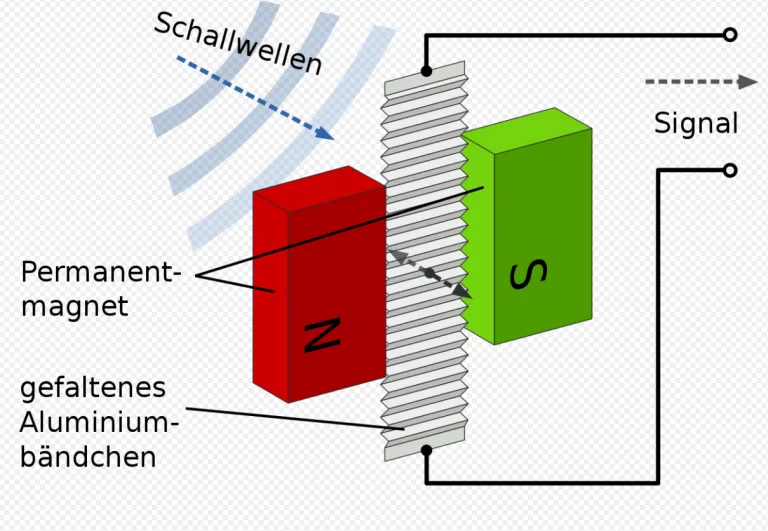
A ribbon microphone is a type of microphone that uses a thin ribbon, or strip, of aluminum foil suspended in a magnetic field to convert vibrations in the air into an electrical signal.
The aluminum ribbon design is the most common type, and it’s the version you’ll typically see in professional studios.
Ribbon microphones are the oldest type of microphone still in common use, predating the dynamic microphone by nearly two decades. Despite that history, they’re used less often in modern music due to their higher cost and fragility, which can make them impractical for everyday applications.
What Is a Ribbon?
The principle behind a ribbon microphone is that sound pressure moves across the ribbon from one end to the other. As a pressure wave passes through the diaphragm, it creates stress on both sides, changing its length. This change in length modulates the magnetic flux at a certain frequency, which the magnet and voice coil combination detect as an AC signal.
The diaphragm essentially acts as a generator, with its output fed into an AC amplifier circuit, then converted into a usable audio signal by a preamplifier. The frequency of this alternating current depends on the speed of sound through the ribbon material, which is why ribbon mics are sometimes called velocity microphones.
This is what sets ribbon mics apart from other types: rather than converting acoustic energy into mechanical energy directly, they detect changes in a magnetic field caused by air movement, capturing a signal that closely tracks the velocity of the sound wave itself.
This makes ribbon mics particularly good at reproducing high-frequency detail, such as solo violin and other stringed instruments.
Features of a Ribbon Microphone
Ribbon microphones are popular for recording thanks to their extended frequency response, low noise characteristics, and above-average transient response.
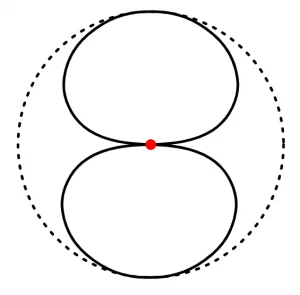
Ribbon mics generally offer a wider frequency response than many other microphone types, meaning they pick up more detail in what you’re recording. They’re built to handle high sound pressure levels, which makes them well suited to loud environments like live music recording, and they’re often easier to maintain than other mic types since they have fewer delicate moving parts.
Despite their reputation for a vintage sound, ribbon microphones do require more careful handling than a typical mic.
Frequency response with a ribbon mic depends on the ribbon’s width and spacing, usually expressed as a ratio between the two. A well-designed ribbon mic delivers excellent frequency response alongside a strong transient response.
Ribbon mics can also be used for passive pickup of acoustic instruments, since they have a notably high output compared to condenser microphones.
The sound from a ribbon mic tends to be thin in a useful way, which translates well to recording instruments like cymbals that might otherwise sound too harsh.
How Does a Ribbon Microphone Work?
The ribbon microphone has been around for a long time, predating even the first moving coil microphone. It works by suspending a thin metallic strip, the ribbon, within the magnetic field of a permanent magnet. Ribbon mics come in two main varieties: single ribbon and dual ribbon.
The basic principle is that the ribbon sits in the middle of the magnetic field. A single ribbon microphone uses just one ribbon suspended at the center of the field, while a dual ribbon microphone uses two.
When shopping for a ribbon microphone, it helps to pay attention to a few key factors:
- Sensitivity
- Output impedance
- Frequency response range
- Polar pattern
- Maximum SPL
- Pricing
Advantages and Disadvantages of Ribbon Microphones
Like any microphone type, ribbon mics come with tradeoffs. On the positive side, they’re generally cheaper to produce than some other professional mic types, and they deliver a clear sound that reduces the need for heavy processing later in the recording process.
Ribbon microphones don’t pick up low-frequency sound as well as some other types, so if you’re recording rock music or bass-heavy instruments, a different mic type may serve you better.
That said, ribbon mics can handle most styles of music well, as long as you avoid pushing extreme frequencies or very high sound levels, which can cause overload.
Advantages of Ribbon Microphones
- Very sensitive and accurate
- Low noise output
- Tend not to pick up excessive background noise
- Produce a distinctive thin, natural sound that suits certain instruments well, making them a strong complement to other best microphones for vocals in a studio setup
Disadvantages of Ribbon Microphones
- Can be large and heavy
- Very sensitive to air movement
- Difficult to achieve a tight polar pattern
- The ribbon itself is fragile and prone to damage
- Less commonly used than dynamic microphones
- Require more maintenance overall
What Are Ribbon Microphones Best For?
Ribbon microphones are often described as some of the most natural-sounding microphones available, largely because the thin aluminum ribbon picks up sound differently than a solid diaphragm.
This results in a more open sound thanks to a wider frequency range, along with less susceptibility to plosives, the popping sound caused by hard consonants like “P.”
Ribbon microphones work especially well for:
- Vocals
- Instruments
- Drums
- Voiceover work
- Kick drums
- Acoustic instruments
- Toms
- Harps
- Acoustic pianos
- Overhead recording
- Snare drums
- Ambient recordings
If you’re building out a multi-mic studio setup, our guide to what a boundary microphone is covers another specialized mic type worth knowing alongside ribbon mics.
Who Invented the Ribbon Microphone?
The ribbon microphone traces back to a patent filed in 1926 for an electric ribbon microphone. A continuous ribbon element was first used in a coin-slot machine produced by the Mills Novelty Company of Chicago, letting users record messages on a metal band inside a glass tube.
In 1925, Western Electric introduced what’s considered the first all-electric pickup microphone, the Model 748A, which used a dynamic loudspeaker as its transducer, varying its impedance in response to changes in sound pressure.
Condenser microphones followed, offering lower sensitivity to hum and electrical noise, though they were more expensive to produce and had limited output.
Engineers eventually began experimenting with a thin metal ribbon as an electrode for an electrodynamic microphone. By 1926, a commercial microphone using this ribbon principle had been produced, and the results stood out: it could be made affordably while still cutting down on extraneous noise effectively, even in busy broadcasting studios with many microphones running at once.
Tips for Buying a Ribbon Microphone
Before buying a ribbon microphone, think through a few things first.
Know what you’ll use it for. If you plan to record high-frequency sources like solo violin or other stringed instruments, look for a ribbon mic with a wide frequency range that captures those higher frequencies well.
Budget for a higher price point, often around $700 or more for a quality option. This reflects how much better ribbon mics tend to perform at capturing high frequencies compared to some other types.
Keep in mind that ribbon microphones don’t pick up low-frequency sound as effectively as close-micing with a dynamic or condenser microphone would.
Ribbon mics are excellent for capturing high-frequency detail, but they do come with a noticeable proximity effect. If that’s not something you want to work around, a dynamic microphone may suit you better. Choose a ribbon mic specifically if you want to capture detailed high-frequency sound, like solo violin or stringed instruments, without picking up too much low-frequency background noise. A sturdy boom arm can also help with precise positioning given how sensitive ribbon mics are to placement.
What Else Are Ribbon Microphones Good For?
Ribbon microphones offer a few practical advantages beyond their sound character. They pick up high frequencies better than many other mic types, making them well suited for solo violin and other stringed instruments without capturing excess low-frequency noise or performer movement.
They also generate relatively little electrical noise themselves, which makes them a strong choice for quieter recording levels. Because they don’t need to be pushed loudly to capture sound effectively, they can also help reduce unwanted noise overall.
Do Ribbon Microphones Need Phantom Power?
Phantom power is commonly used to power condenser microphones, and whether a ribbon microphone needs it depends on its specific design.
Phantom power typically supplies 48 volts of DC current to stabilize the charge on a condenser microphone’s internal capacitors, delivered through pin 2 on an XLR connector.
Some ribbon microphones don’t rely on phantom power at all, while others include a feature sometimes called a serpentine switch to manage power needs. The tradeoff is that ribbon mics requiring phantom power tend to be more fragile and dependent on a working power source to operate, unlike most dynamic microphones, which generally don’t require any external power at all.
Conclusion
Ribbon microphones remain one of the most natural-sounding microphone types available, particularly for vocals, strings, and certain percussion. They require more careful handling than dynamic or condenser microphones, but the sound quality they deliver, especially for high-frequency detail, makes them worth considering for the right use case.
If you want to compare ribbon mics against other types before deciding, our guides on what a condenser microphone is and what a dynamic microphone is cover the key differences in more detail. For broader buying guidance at different price points, see our guide to best microphones under $200.