
Choosing the right shotgun microphone for film and video work is different from picking a regular condenser or dynamic microphone for studio use. We received several shotgun microphones for review and have put together this guide covering 10 options, what makes shotgun mics different, and how to pick the right one for your setup.
Disclosure: Some links in this article may be affiliate links. If you buy through our links, we may earn a small commission at no extra cost to you. As an Amazon Associate, we earn from qualifying purchases.
What Is a Shotgun Microphone?
A shotgun microphone is a highly directional microphone designed to be pointed toward a subject from a distance. Filmmakers, news anchors, and actors commonly use shotgun microphones to capture clear audio without the microphone appearing in frame.
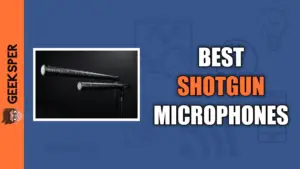
Shotgun microphones capture sound from a narrow angle, typically somewhere between 30 and 60 degrees depending on the model. Visually, they look quite different from condenser or dynamic microphones, usually appearing as a long, slim tube.
How Do Shotgun Microphones Work?
A shotgun microphone captures sound within a specific angle of coverage, focusing tightly on the direction it is pointed. This narrow pickup area, combined with a longer body design, allows it to capture sound from farther away than a typical condenser or dynamic microphone while rejecting sound from the sides.
To get the best results, the microphone needs to be pointed directly at the source you want to capture.
Who Should Use a Shotgun Microphone?
Shotgun microphones are mainly used by filmmakers, video creators, and audio professionals. They are common for recording speeches, conferences, interviews, and talks.
In film and television production, shotgun microphones are often mounted on booms or hung from overhead rigs so they stay out of frame while still capturing clear dialogue. This lets actors and presenters perform without holding a microphone.
Best Shotgun Microphones
1. Sennheiser MKH416-P48U3
Sennheiser is one of the most established microphone brands, and the MKH416-P48U3 is a short tube condenser shotgun microphone with a strong reputation among professionals.
In our experience, this microphone delivers a clean, crystal clear sound without picking up unwanted background noise. It has been used on numerous film and TV productions, which has helped build its reputation among filmmakers and journalists.
It has a supercardioid polar pattern, a frequency response of 40Hz to 20kHz, and a maximum sound pressure level of 130dB. These specs are well suited to capturing sound from a distance without adding extra noise.
Best for
- Filmmakers and journalists wanting a reliable, professional shotgun mic
- Users new to shotgun microphones who want a dependable starting point
- Radio and broadcast applications
Key features
- Supercardioid polar pattern
- 40Hz to 20kHz frequency response
- Maximum SPL of 130dB
- Professional, simple design
Pros
- Clean, clear sound quality
- Professional build and design
- Easy to use
- Strong noise cancellation
- Reliable for beginners and professionals alike
Cons
- Premium price point
Who should buy it
- Users wanting a trusted, professional grade shotgun microphone
Who should avoid it
- Users on a tight budget looking for an entry level option
Final verdict
The Sennheiser MKH416-P48U3 is one of the most reliable choices on this list and a strong pick if you want a microphone that performs consistently across professional settings.
2. Rode NTG-3
Rode has a reputation for bringing distinctive features to its microphones, and the NTG-3 is a shotgun condenser microphone built for television, film, and broadcast use.
We found this microphone straightforward to use right out of the box, with a premium, minimal design and durable aluminum construction that is also weatherproof and moisture resistant.
It has a frequency response of 40Hz to 20kHz and a maximum SPL of 130dB, with an XLR output for easy connectivity to standard audio equipment.
Best for
- Television and film production
- Users wanting a weatherproof, durable shotgun mic
- An alternative to the Sennheiser MKH416 at a lower price
Key features
- Supercardioid polar pattern
- 40Hz to 20kHz frequency response
- Maximum SPL of 130dB
- XLR output
- Weatherproof and moisture resistant aluminum build
Pros
- Premium design and build quality
- Clear, natural sound with good noise cancellation
- XLR output for easy connectivity
- Easy to use and handle
- More affordable than the MKH416-P48U3
Cons
- None significant for its intended use
Who should buy it
- Users wanting a durable, weatherproof shotgun mic at a slightly lower price than top tier options
Who should avoid it
- Users with no budget flexibility who need the cheapest possible option
Final verdict
The Rode NTG-3 is a strong runner-up choice, offering durability and sound quality close to the Sennheiser MKH416 at a more accessible price.
3. Rode NTG4+
The Rode NTG4+ stands out as one of the first shotgun microphones to include a built-in rechargeable battery, a supercardioid condenser design with a distinctive look.
We found the inbuilt battery genuinely useful in the field, since it reduces dependence on phantom power. The battery charges via USB in about 2 hours, and the microphone includes a -10dB pad with digital switching for convenience. Phantom power can still be used as a backup when the battery is unavailable.
It has a frequency response of 20Hz to 20kHz and a maximum SPL of 135dB.
Best for
- Users who move between locations frequently
- Field recording where phantom power may not always be available
- Users wanting digital switching controls
Key features
- Supercardioid polar pattern
- 20Hz to 20kHz frequency response
- Maximum SPL of 135dB
- Built-in rechargeable battery with USB charging
- -10dB pad with digital switching
Pros
- Built-in battery adds flexibility
- High quality materials
- Digital switches are easy to use
- Easily portable
- Good battery life for the size
Cons
- Some users prefer the NTG-3 for certain applications
Who should buy it
- Users who frequently work in locations without easy access to phantom power
Who should avoid it
- Users who strongly prefer the NTG-3’s specific sound characteristics
Final verdict
The Rode NTG4+ is a convenient, portable option thanks to its built-in battery, making it a strong choice for users who move between locations often.
4. Sennheiser MKE600
The Sennheiser MKE600 is a condenser shotgun microphone designed to pair well with DSLR cameras, making it a popular choice for video creators.
In our testing, this microphone delivered excellent directivity, capturing sound clearly from the front while rejecting noise from the sides. Its all-metal construction felt durable despite its compact, simple design.
It has a supercardioid polar pattern, a frequency response of 40Hz to 20kHz, and a maximum SPL of 132dB. It includes a switchable low cut filter for additional noise control and can run on battery power or phantom power at +48 volts.
Best for
- DSLR video production
- Vloggers and content creators recording with cameras
- Users wanting flexible power options
Key features
- Supercardioid polar pattern
- 40Hz to 20kHz frequency response
- Maximum SPL of 132dB
- Switchable low cut filter
- Runs on battery or +48V phantom power
Pros
- Excellent noise cancellation and directivity
- Lightweight, durable all-metal build
- Easy to connect with DSLR cameras
- Flexible power options
Cons
- Battery life could be longer
Who should buy it
- Video creators and DSLR users wanting a dedicated camera-mounted shotgun mic
Who should avoid it
- Users needing extremely long battery life without backup power options
Final verdict
The Sennheiser MKE600 is one of the best options for DSLR video work, offering strong noise cancellation in a compact, durable package.
5. Rode VideoMic PRO+
The Rode VideoMic PRO+ is a supercardioid condenser shotgun microphone designed as a strong alternative to the Sennheiser MKE600 for camera-mounted use.
We found the design minimal and easy to work with, and the automatic power function with plug-in power is a nice touch. It uses 2 AA rechargeable batteries that can be charged via USB.
It has a frequency response of 20Hz to 20kHz, a maximum SPL of 133dB, and a 0.55 inch capsule, which is smaller than some alternatives but performs well in practice.
Best for
- Camera-mounted recording for YouTube and video content
- Users wanting digital switching and more control options
- Portable video production setups
Key features
- Supercardioid polar pattern
- 20Hz to 20kHz frequency response
- Maximum SPL of 133dB
- Automatic power function with plug-in power
- USB rechargeable AA batteries
Pros
- More control through digital switching
- Easily portable
- Good battery life
- Strong sound quality with minimal noise
Cons
- Rubber components may wear over time
Who should buy it
- Content creators wanting a portable, easy to control camera mic
Who should avoid it
- Users who prioritize the most durable build materials above all else
Final verdict
The Rode VideoMic PRO+ is a strong, portable alternative to the MKE600 for camera-mounted recording, especially for users who want more digital control.
6. Audio-Technica AT875R
The Audio-Technica AT875R is a line and gradient condenser shotgun microphone and one of the most budget friendly options in this list.
In our experience, this is a great starting point for beginners moving into video production, broadcasting, or similar fields. It became popular quickly due to its accessible price and compact, lightweight design.
It has a frequency response of 90Hz to 20kHz and a maximum SPL of 127dB. The narrower low end frequency response means it may sound slightly thin on low pitched voices, and it performs best at short to medium distances rather than very long range.
Best for
- Beginners entering video production or broadcasting
- Users wanting an affordable shotgun microphone
- Short to medium distance recording
Key features
- Line and gradient polar pattern
- 90Hz to 20kHz frequency response
- Maximum SPL of 127dB
- Compact, lightweight design
Pros
- Best for beginners
- Very compact and lightweight
- Good value for the price
- Solid noise cancellation at short to medium range
Cons
- Sounds slightly thin on low pitched voices
- Less effective at longer recording distances
Who should buy it
- Beginners wanting an affordable entry point into shotgun microphones
Who should avoid it
- Users needing strong low end response or long range pickup
Final verdict
The AT875R is the most pocket friendly option in this guide and a solid choice for anyone starting out in video production. The AT879R is also worth considering as an alternative.
7. Shure VP89L
The Shure VP89L is a premium modular long dynamic shotgun microphone and the only microphone in this list offering multiple polar patterns. It is also available in shorter and medium length variants.
We found the build quality impressive, with aircraft-grade aluminum alloy construction that feels lightweight yet sturdy. It has a frequency response of 40Hz to 20kHz and a maximum SPL of 128dB, along with a switchable low filter for additional noise control.
Additional features include low self-noise, high output level, common mode rejection, and a supplied windscreen. It requires phantom power between 11 and 52 volts.
Best for
- Indoor and outdoor film and video recording
- Users wanting multiple polar pattern options
- Productions needing modular microphone lengths
Key features
- Multiple polar patterns
- 40Hz to 20kHz frequency response
- Maximum SPL of 128dB
- Aircraft-grade aluminum alloy construction
- Switchable low filter
Pros
- Multiple polar patterns add versatility
- Lightweight yet durable build
- Easy to use
- Good performance across indoor and outdoor settings
Cons
- Being a dynamic mic, it can pick up slightly more noise than condenser alternatives
Who should buy it
- Users wanting a versatile, modular dynamic shotgun microphone
Who should avoid it
- Users specifically wanting the lowest possible self-noise from a condenser design
Final verdict
The Shure VP89L stands out for its versatility and build quality, making it a strong choice for productions that need flexibility across polar patterns and microphone lengths.
8. Sennheiser MKH60P48
The Sennheiser MKH60P48 is a short condenser shotgun microphone known for its compact, lightweight design and versatility.
In our experience, this is one of the most well rounded microphones in this list, performing strongly across different recording situations. It has a premium look and feel that suits long term professional use.
It has a frequency response of 50Hz to 20kHz and a maximum SPL of 134dB, allowing it to handle louder sources like acoustic instruments or drums. The sound output is natural and clean, without noticeable artificial interference.
Best for
- Long term professional projects
- Recording albums or live stage performances
- Users wanting a versatile, premium shotgun microphone
Key features
- Supercardioid polar pattern
- 50Hz to 20kHz frequency response
- Maximum SPL of 134dB
- Short, lightweight, premium design
Pros
- Versatile across recording situations
- Lightweight and premium build
- Pure, natural sound output
- Handles louder sound sources well
Cons
- Higher price point
Who should buy it
- Users working on long term or professional projects who want a versatile, high quality shotgun mic
Who should avoid it
- Users on a limited budget
Final verdict
The Sennheiser MKH60P48 is a premium, versatile option that performs well across a range of professional recording situations.
9. Shure MV88
The Shure MV88 is a digital stereo condenser microphone designed specifically for iPhone and iOS devices. It is the most budget friendly option in this list and is somewhat different from traditional shotgun microphones.
We found this microphone works well for mobile recording, offering multiple polar patterns despite its compact size. The build quality felt durable, though the design is a bit more complex looking than other options here.
It has a frequency response of 20Hz to 20kHz and a maximum SPL of 120dB. It is well suited to speech and vocals but is not ideal for recording instrumentals.
Best for
- iPhone and iOS based video and content creation
- Mobile journalists and creators
- Users wanting a budget friendly, portable option
Key features
- Multiple polar patterns
- 20Hz to 20kHz frequency response
- Maximum SPL of 120dB
- Designed specifically for iOS devices
Pros
- Crisp sound across highs and lows
- Multiple polar pattern options
- Easy to use with iOS devices
- Most affordable option in this list
Cons
- Limited to iOS devices for full functionality
Who should buy it
- iPhone and iOS users wanting a portable, versatile microphone for video and content creation
Who should avoid it
- Users needing a traditional XLR shotgun microphone for professional camera setups
Final verdict
The Shure MV88 is best understood as a mobile recording solution rather than a traditional shotgun microphone, and it performs well within that role for iOS users.
10. Shure VP38F
The Shure VP38F (also known as the VP83F LensHopper) is a condenser shotgun microphone with integrated flash recording, designed to mount directly onto a camera lens.
We found the compact, professional design easy to work with for interviews and on location video. The build materials felt reliable and well suited to regular use in photography and video production.
It has a supercardioid polar pattern and a frequency response of 50Hz to 20kHz, with sound quality and noise cancellation that performed well in our use.
Best for
- Photography and video production
- Interviews and on location recording
- Users wanting a camera lens mounted shotgun mic
Key features
- Supercardioid polar pattern
- 50Hz to 20kHz frequency response
- Integrated flash recording
- Compact, professional design
Pros
- Strong build quality and design
- Easy to use
- Good overall audio quality
Cons
- May need a wind muff in windy outdoor conditions
Who should buy it
- Users wanting a lens-mounted shotgun microphone as an alternative to the Rode VideoMic Pro
Who should avoid it
- Users planning to record primarily in windy outdoor environments without additional accessories
Final verdict
The Shure VP38F is a solid alternative to the Rode VideoMic Pro for camera lens mounted recording, particularly for interviews and on location work.
Buyer’s Guide for Shotgun Microphones
Directionality
Directionality depends on the microphone’s polar pattern. Most shotgun microphones use a supercardioid pattern, capturing sound from a narrow angle, typically between 30 and 50 degrees, directly in front of the microphone.
Low Self Noise
Self-noise refers to the noise generated by the microphone itself, including any vibrations picked up from its mount or surface. Lower self-noise generally means cleaner recordings.
Brand
Choosing microphones from established brands tends to offer more consistent quality and support. All the microphones in this guide come from well known brands in the audio and video production industry.
Design
Design is partly a matter of personal preference, including size, color, and materials, but it can also affect how easily a microphone integrates with your camera or rig.
Price
Set a budget before shopping and look for the microphone that best fits your needs within that range. Good sound quality is available across a wide range of price points.
Before buying, check the latest price and availability, since pricing and product availability can change over time.
FAQ
What are shotgun microphones good for?
Shotgun microphones are well suited for filmmaking, video production, and professional audio recording where the microphone needs to capture sound from a distance without being visible in frame.
What type of microphone is a shotgun microphone?
Shotgun microphones are highly directional microphones, typically using a supercardioid or similar narrow pickup pattern, with a projection angle generally between 30 and 60 degrees.
How do you record with a shotgun microphone?
Point the microphone directly at the sound source you want to capture. Since shotgun microphones are highly directional, accurate positioning makes a significant difference in recording quality.
Conclusion
All 10 microphones in this guide perform well for film, video, and broadcast use, with different strengths depending on your setup. The Sennheiser MKH416-P48U3 and Rode NTG-3 stand out as reliable, professional options, the Sennheiser MKE600 and Rode VideoMic PRO+ are strong choices for DSLR and camera-mounted work, and the Audio-Technica AT875R and Shure MV88 offer more budget friendly entry points.
For more on choosing microphones for vocal recording, see our guide to best microphones for vocals, singing or recording.