

Further reading
See how we test microphones and how microphones work before comparing pickup type and connection requirements.
Shure SM58 is the best overall choice. It wins because professional vocal microphone with included stand adapter and storage bag directly supports live vocals and durable spoken-word use. AKG Perception 170 is the strongest alternative for buyers who prioritize acoustic instruments and overhead detail.
As an Amazon Associate I earn from qualifying purchases. GeekSper did not personally test these products. Recommendations are based on confirmed product specifications, connection requirements, intended use, and practical tradeoffs.
How we chose
We prioritized pickup type, connection, room tolerance, required gain, monitoring options, mounting needs, and suitability for the stated voice or instrument. Dynamic models received extra credit for close-spoken rejection in untreated rooms, while condensers were favored only when their added detail served the use case.
Quick comparison
| Product | Editorial position | Design | Connection | Best use | Primary limitation |
|---|---|---|---|---|---|
| Shure SM58 | Best overall | cardioid dynamic handheld | XLR | live vocals and durable spoken-word use | It requires an XLR input and may need more gain than a sensitive condenser. |
| AKG Perception 170 | Best for acoustic instruments and overhead detail | small-diaphragm condenser | XLR | acoustic instruments and overhead detail | It requires phantom power and captures more room sound than a close dynamic microphone. |
| Marantz Professional MPM-1000 | Best for entry-level studio voice recording | cardioid condenser | XLR | entry-level studio voice recording | It needs phantom power and benefits from a quiet, treated recording position. |
| RØDE PodMic | Best for desk-mounted broadcast speech | cardioid dynamic broadcast microphone | XLR | desk-mounted broadcast speech | It requires an audio interface and a separate stand or boom arm. |
1. Shure SM58 – Best overall

Shure SM58-LC Dynamic Vocal Microphone – Professional Handheld Cardioid XLR Mic for Singing, Live Performance, Studio Recording, Podcast & Broadcast, Black

Why it earned this position: Shure SM58 combines professional vocal microphone with included stand adapter and storage bag with a cardioid dynamic handheld format. For this buyer, the practical advantage is live vocals and durable spoken-word use.
What that means in use: Its XLR connection determines which devices or supporting hardware are required. It requires an XLR input and may need more gain than a sensitive condenser.
Closest comparison: Shure SM58 is the better choice for live vocals and durable spoken-word use, while AKG Perception 170 is more appropriate for acoustic instruments and overhead detail.
Pros
- Professional vocal microphone with included stand adapter and storage bag
- Well suited to live vocals and durable spoken-word use
Cons
- It requires an XLR input and may need more gain than a sensitive condenser.
- The wired connection limits movement and must match the source
Buy it if: live vocals and durable spoken-word use is the priority and the XLR connection fits the setup. Skip it if: the stated limitation conflicts with the room, device, or workflow.
Verdict: Shure SM58 is a focused choice for live vocals and durable spoken-word use, not a universal replacement for every alternative.
2. AKG Perception 170 – Best for acoustic instruments and overhead detail

AKG Pro Audio AKG Perception 170 Professional Instrumental Microphone
Why it earned this position: AKG Perception 170 combines instrument-focused pencil condenser format with a small-diaphragm condenser format. For this buyer, the practical advantage is acoustic instruments and overhead detail.
What that means in use: Its XLR connection determines which devices or supporting hardware are required. It requires phantom power and captures more room sound than a close dynamic microphone.
Closest comparison: AKG Perception 170 is the better choice for acoustic instruments and overhead detail, while Marantz Professional MPM-1000 is more appropriate for entry-level studio voice recording.
Pros
- Instrument-focused pencil condenser format
- Well suited to acoustic instruments and overhead detail
Cons
- It requires phantom power and captures more room sound than a close dynamic microphone.
- The wired connection limits movement and must match the source
Buy it if: acoustic instruments and overhead detail is the priority and the XLR connection fits the setup. Skip it if: the stated limitation conflicts with the room, device, or workflow.
Verdict: AKG Perception 170 is a focused choice for acoustic instruments and overhead detail, not a universal replacement for every alternative.
3. Marantz Professional MPM-1000 – Best for entry-level studio voice recording

Marantz Professional MPM-1000 – Studio Recording XLR Condenser Microphone with Desktop Stand and Cable – For Podcast and Streaming Projects
Why it earned this position: Marantz Professional MPM-1000 combines desktop stand and XLR cable included with a cardioid condenser format. For this buyer, the practical advantage is entry-level studio voice recording.
What that means in use: Its XLR connection determines which devices or supporting hardware are required. It needs phantom power and benefits from a quiet, treated recording position.
Closest comparison: Marantz Professional MPM-1000 is the better choice for entry-level studio voice recording, while RØDE PodMic is more appropriate for desk-mounted broadcast speech.
Pros
- Desktop stand and XLR cable included
- Well suited to entry-level studio voice recording
Cons
- It needs phantom power and benefits from a quiet, treated recording position.
- The wired connection limits movement and must match the source
Buy it if: entry-level studio voice recording is the priority and the XLR connection fits the setup. Skip it if: the stated limitation conflicts with the room, device, or workflow.
Verdict: Marantz Professional MPM-1000 is a focused choice for entry-level studio voice recording, not a universal replacement for every alternative.
4. RØDE PodMic – Best for desk-mounted broadcast speech
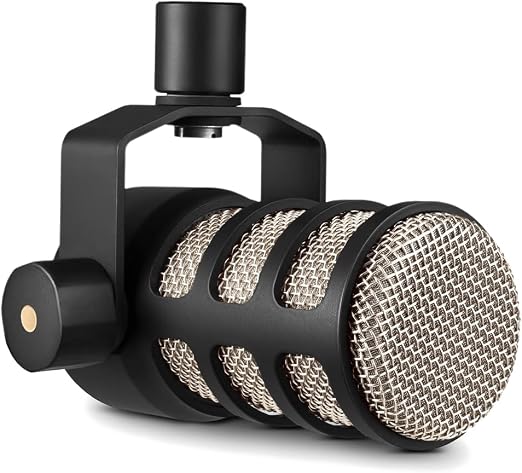
RØDE PodMic Cardioid Dynamic Broadcast Microphone – XLR Output, Requires Audio Interface (RØDECaster, AI-1, or similar). For USB Plug-and-Play, see PodMic USB. | Broadcast-Grade Dynamic Cardioid Xlr Mic, Built-in Pop Filter, Shockmount, Swing Mount, Requires Audio Interface
Why it earned this position: RØDE PodMic combines built-in pop filter, internal shock mounting, and swing-mount format with a cardioid dynamic broadcast microphone format. For this buyer, the practical advantage is desk-mounted broadcast speech.
What that means in use: Its XLR connection determines which devices or supporting hardware are required. It requires an audio interface and a separate stand or boom arm.
Closest comparison: RØDE PodMic is the better choice for desk-mounted broadcast speech, while Shure SM58 is more appropriate for live vocals and durable spoken-word use.
Pros
- Built-in pop filter, internal shock mounting, and swing-mount format
- Well suited to desk-mounted broadcast speech
Cons
- It requires an audio interface and a separate stand or boom arm.
- The wired connection limits movement and must match the source
Buy it if: desk-mounted broadcast speech is the priority and the XLR connection fits the setup. Skip it if: the stated limitation conflicts with the room, device, or workflow.
Verdict: RØDE PodMic is a focused choice for desk-mounted broadcast speech, not a universal replacement for every alternative.
Buying guide
Choose USB or XLR deliberately
USB is the shortest path to a computer. XLR requires an interface but separates the microphone from the converter and makes later upgrades easier. A dual-output microphone can start on USB and move to XLR without replacing the capsule.
Use the room to choose the transducer
A dynamic microphone used within a few inches of the mouth raises the direct voice level relative to the room. A condenser can capture more high-frequency detail, but it also reveals keyboard noise, hard-wall reflections, and traffic more readily. For an untreated room, placement is usually more valuable than an extreme sample-rate specification.
Budget for positioning and gain
An XLR microphone may need an interface, cable, stand, and pop filter. A broadcast dynamic may also need more clean gain than an inexpensive interface supplies comfortably. Include those items in the total cost before comparing two microphone prices.
Frequently asked questions
Is a dynamic microphone always better in a noisy room?
No. A dynamic model usually helps when used close, but pickup pattern, placement, gain, and the direction of the noise still matter.
Do I need an audio interface?
You need one for an XLR-only microphone. USB microphones connect directly to a compatible computer, while dual-output models support either workflow.
Should I prioritize sample rate?
No, not before placement and room control. A well-positioned microphone at a standard recording rate normally produces a more useful result than a distant microphone advertising a larger number.
Related GeekSper guides
- How microphones convert sound into a signal
- When a condenser microphone is the right choice
- Microphones for interview recording
Final verdict
Best overall: Shure SM58 for live vocals and durable spoken-word use. Best alternative: AKG Perception 170 for acoustic instruments and overhead detail. Buyers should avoid the top choice when it requires an XLR input and may need more gain than a sensitive condenser.