

The Shure SM58 is one of the most widely recognized dynamic microphones, used by singers, broadcasters, and speakers for decades. We tested the SM58 to see how it holds up for vocals, studio recording, and live performance.
This review covers the SM58’s features, technical specs, performance, pros, cons, and what comes in the box.
Shure SM58 Microphone Review
Shure has been producing quality microphones for many years, building a reputation for durable, reliable products used for recording vocals, instrumentals, and music. The SM58 is one of the brand’s most recognizable microphones, developed with a rugged body and widely used in studios for recording vocals.
This microphone has a world standard, tailored vocal response, with a shock mount system and rugged body construction. The mesh grille at the top is made of steel with a chrome finish, giving it a classic, recognizable look.
In our testing, the SM58’s versatility stood out, performing well both indoors and outdoors for speech and singing. The clarity of sound and good adjustment also make it suitable for streaming and podcasting, in addition to its more traditional uses.
The Shure SM58 is a dynamic vocal microphone well suited for those starting out with studio recording or vocals, and it remains one of the most recommended microphones from Shure.
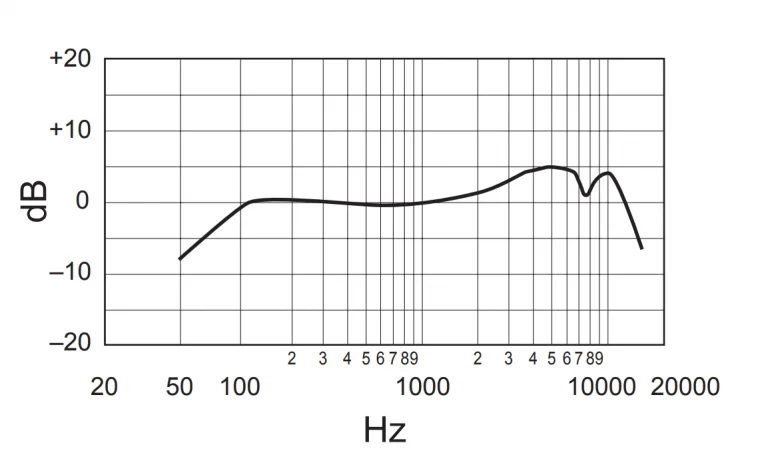
It has a frequency response of 50Hz to 15kHz with a cardioid polar pattern, which is ideal for a dynamic microphone. In our testing, noise cancellation performed impressively for studio vocal recording.
Features of the SM58 Microphone
Here are the features that stood out most in our testing.
Shock Mount
The shock mount helps absorb unwanted noise caused by handling the microphone or movement while singing or recording. The pneumatic shock mount removes vibration from the microphone, resulting in a cleaner audio recording.
Pop Filter
A built-in pop filter sits within the spherical mesh grille at the top of the microphone, helping block wind and environmental sounds. This keeps the microphone focused on capturing the sound directly in front of it, such as a person speaking or singing.
Audio Capturing
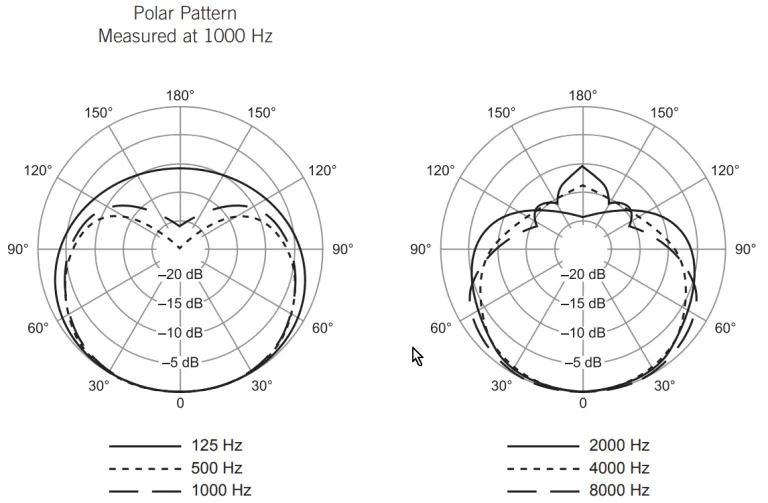
The microphone is built to handle voice with clarity and a clean sound. Its uniform cardioid polar pattern reproduces tones and sounds as intended while keeping background noise to a minimum, contributing to the strong sound quality it is known for across many use cases.
Build Quality
The construction uses a metal body with a mesh chrome grille, which adds some weight but contributes to durability for long term use. The break-resistant stand adapter and durable finishing help the microphone hold up well during demanding performances.
Sound Quality
In our testing, the SM58 reliably recorded vocals and other sound sources, capturing nearby sound clearly while the pop filter helped reject background noise. The microphone produces a robust sound with good bass, with strong isolation from other sources, reflecting its design as a dynamic vocal microphone for studio recording with clarity.
Our Experience
When evaluating microphones, we generally look at three things: sound quality, consistency, and durability.
In our testing, the Shure SM58 delivered on all three, which is part of why it remains one of the most widely used microphones globally for recording vocals and audio.
This dynamic vocal microphone has a smooth, mid-frequency rise that adjusts the sound, paired with a uniform cardioid pickup pattern that isolates the main audio source from background noise, producing a clean sound with minimized interference.
Key characteristics include:
- Frequency response tailored for vocals, with brightened midrange and bass roll-off
- Uniform cardioid pickup pattern that isolates the main sound source and minimizes background noise
- Pneumatic shock mount system that cuts down handling noise
- Effective, built-in spherical wind and pop filter
- Break-resistant stand adapter that rotates 180 degrees
- Cardioid (unidirectional) dynamic design
- Frequency response of 50Hz to 15kHz
Technical Specifications
| Specification | Details |
|---|---|
| Microphone type | Dynamic vocal microphone |
| Polar pattern | Cardioid |
| Frequency response | 50Hz to 15kHz |
| Electromagnetic hum sensitivity | 60Hz: 11dB, 500Hz: 24dB, 1kHz: 33dB |
| Impedance | 150 ohms |
| Maximum SPL | 130dB |
| Output level | -54.4 dBV/Pa |
| Switches | Bass roll-off and mid-range emphasis |
| Microphone connector | Three-pin professional audio (male XLR) |
| Swivel assembly | Integrated, captive nut, fits 5/8 inch -27 thread |
| Polarity | Positive pressure on diaphragm produces positive voltage on pin 2 relative to pin 3 |
| Case | Dark gray, enamel-painted, die-cast metal with matte silver spherical steel mesh grille |
| Weight | 298 grams |
Pros and Cons
Pros
- Frequency response tailored for vocals
- Brightened midrange and bass roll-off help control proximity effect
- Effective built-in pop filter for wind protection
- Frequency response of 50Hz to 15kHz suited for vocals
- Pneumatic shock mount removes handling noise
- Uniform cardioid pickup pattern
- Strong vocal isolation from background noise
Cons
- May still benefit from an external pop filter for studio recordings
- Designed primarily as a handheld microphone, which not all vocalists prefer
What’s in the Box
The Shure SM58 comes with:
- Shure SM58 microphone
- 25-foot XLR connector cable
- Microphone clip
- Carrying or storage bag
- Foam windscreen
- Desk stand
- Shock stopper isolation mount
You can pair this with your own pop filter for vocal or voiceover recordings. For more on what a pop filter does, see our guide on what does a pop filter do.
Conclusion
The Shure SM58 is a strong choice for anyone wanting a durable, consistent microphone that records sound well, with solid bass and mid-range tones and a cardioid pickup that minimizes background noise.
It is also versatile enough for studio settings or live performances. Based on our testing, we would recommend it to anyone looking for a reliable microphone for vocals or instruments.
Before buying, check the latest price and availability, since pricing and product availability can change over time. If you are comparing dynamic microphones for other use cases, our guide to best microphones for bass amp covers the SM58 alongside other dynamic options.